
Categories
Wanderlust

How to Ensure a Flawless, Serene Travel Handover

Leaving home for an extended trip—whether for business, seasonal travel, or a well-deserved retreat—often comes with a quiet, underlying anxiety. Beyond packing luggage and closing up office tasks, high-net-worth homeowners and devoted pet parents face a unique dilemma: How do I ensure my home’s intricate systems and my pets’ delicate routines aren’t thrown into chaos while I’m away?

​For sensitive rescues, senior animals requiring precise medication schedules, or homes with specialized smart-home mechanics, traditional drop-in visits or chaotic boarding facilities simply aren’t enough.

​Achieving true peace of mind while away requires an intentional handover strategy. Below is a comprehensive, 4-part travel checklist designed to preserve your pets’ emotional stability and maintain seamless property operations.

​1. Establish Olfactory Anchoring for Smooth Decompression

​Animals navigate environmental shifts primarily through scent and routine. When owners leave, the sudden disappearance of familiar scents can elevate stress hormones during the first 48 hours of transition.

​To support your pet’s natural nervous system regulation:

  • Create a “Scent Anchor”: Leave an unwashed t-shirt or blanket in your pet’s primary sleeping or relaxation zones 24 hours prior to departure.
  • Maintain Spatial Boundaries: Keep favorite beds, crates, or quiet corners in their exact, familiar locations. Avoid rearranging furniture or deep-cleaning pet bedding immediately before a trip.
  • Practice Non-Coercive Transitioning: Instruct your care provider to allow shy or skittish pets to initiate contact at their own pace. Respecting spatial boundaries prevents fear, anxiety, and stress (FAS) during the initial handover window.

​2. Build a Complete Medical & Emergency Protocol

​Leaving a basic veterinary address on the kitchen counter leaves room for guesswork during a crisis. High-standard pet care relies on proactive, clinical-level organization.

​Before stepping onto your flight, assemble a dedicated Emergency & Care Binder containing:

  • Pre-Authorized Expense Limits: Clearly specify your pre-approved financial threshold for immediate, emergency veterinary treatment.
  • Medication Administration Logs: For animals on strict oral, transdermal, or injectable schedules, outline exact dosages, timing windows, and administration preferences (e.g., pill pockets, liquid syringes).
  • Designated Local Proxy: Appoint a trusted local contact who holds legal or decision-making authorization if you are unreachable due to flight times or international cellular dead zones.
  • Primary & Specialty Vet Directives: Include contacts for both your primary wellness vet and the nearest 24/7 emergency veterinary hospital.

​3. Audit Property Systems & Operational Quirks

​Modern homes feature complex environmental and automated systems that require mindful, attentive oversight. A unexpected system failure can quickly derail a trip if your caretaker isn’t briefed on your home’s subtle operational nuances.

​Document key operating procedures for:

  • Automated & Smart-Home Systems: Brief your steward on keyless door access codes, security alarm bypass sequences, Wi-Fi router locations, and security camera schedules.
  • Environmental & Utility Controls: Provide clear instructions for HVAC climate schedules, solar power arrays, generators, backup batteries, or water filtration systems.
  • Grounds & Botanical Stewardship: Outline schedules for automated irrigation cycles, greenhouse humidity management, pool/spa monitoring, and sensitive indoor plant care.
  • Service Provider Coordination: Note scheduled access days for routine service vendors, such as landscapers, housekeepers, or pool technicians.

Once your home’s operational rhythms are documented and your steward is fully briefed, you can focus entirely on enjoying your itinerary—whether you’re booking local day tours and guided experiences or simply unwinding on a quiet retreat.

​4. Prioritize Temporal Rhythm Over High Activity

​When owners travel, anxious or sensitive pets don’t need high-intensity stimulation—they need predictable pacing.

​Drastic shifts in daily routines can cause digestive upset, behavioral regression, or heightened anxiety. Preserve your animal’s temporal rhythm by keeping these factors consistent:

  • Precise Feeding & Medication Windows: Maintain exact meal and medication timing to protect internal digestive rhythms.
  • Quiet Hours & Decompression Routines: Respect established rest periods, particularly for senior animals or rescues who thrive in low-stimulus environments.
  • Mindful Exercise & Play: Adapt exercise intensity to match your pet’s baseline energy levels rather than over-stimulating them to compensate for your absence.

Seeking High-Touch In-Home Stewardship for Your Upcoming Travel?

​Leaving your home and companion animals in the hands of another requires complete trust.

​At Glory in Growth, I provide specialized, low-impact in-home stewardship tailored for complex households, high-needs or senior animals, and properties requiring attentive care. From strict medical adherence to discrete, respectful property oversight, my care model centers on slowness, emotional stability, and absolute continuity.
​🌿 Explore Specialized Care & Request Home Stewardship

Categories
Wanderlust

The Simple Practice That Makes Travel Meaningful

Introduction: Travel as Expansion, Not Escape

Travel has never felt like escape to me.

It feels like expansion.

When you step outside your familiar environment, something subtle yet powerful happens. The routines that shape your thoughts begin to loosen. Your senses heighten. You notice light filtering through unfamiliar windows. The cadence of a new neighborhood. The way morning feels different in a different place.

That attentiveness reshapes your inner landscape.

Writer and cultural theorist bell hooks described love not as a fleeting feeling, but as a disciplined practice of care, commitment, and presence. I’ve come to understand travel — and especially house sitting — through that same lens.

Not as consumption.
Not as sightseeing.
But as a living practice of care.

Because when you live in someone else’s home, care stops being abstract. It becomes embodied.


Why Travel Resets the Mind and Nervous System

One reason people feel stagnant or emotionally compressed is environmental repetition.

The same streets.
The same rooms.
The same roles.

Travel interrupts that loop.

New environments demand awareness. You cannot operate on autopilot in a new place. You must observe. Adapt. Stay present.

This heightened awareness has measurable psychological benefits. When your senses engage — unfamiliar air, new city rhythms, the companionship of a pet in a different home — your nervous system shifts. You soften into the moment because presence becomes necessary.

But what truly transformed travel for me wasn’t movement.

It was responsibility.


How House Sitting Transforms Travel Into Purpose

Sightseeing is passive.

House sitting is relational.

When a homeowner entrusts you with their space, animals, and plants, they are entrusting you with the rhythm of their daily life. That trust changes everything.

House sitting requires:

  • Consistency
  • Reliability
  • Emotional steadiness
  • Respect for another person’s routines

Feeding schedules.
Morning walks.
Watering plants at the right time.
Maintaining order — not because someone is watching, but because stewardship demands it.

And something profound happens in that rhythm.

Animals respond to tone and calm presence.
Plants respond to light and consistency.

There is no performance required. Presence is enough.

In a culture obsessed with speed and productivity, house sitting cultivates something rare:

Slowness.
Attentiveness.
Emotional regulation.


The Hidden Mental Health Benefits of House Sitting

House sitting supports well-being in unexpected ways:

1. Nervous System Regulation

Caring for animals and maintaining a peaceful environment creates mutual regulation. The home stays calm. The pets stay secure. And your own system stabilizes.

2. Structured Freedom

Working remotely while house sitting provides stability without stagnation. You anchor in one place long enough to build temporary routines — creating order while still expanding perspective.

3. Purpose-Driven Travel

Instead of drifting between destinations, you become a steward. Responsibility deepens meaning.

4. Strengthened Emotional Intelligence

You learn to notice subtle cues — a change in a cat’s appetite, a plant leaning toward light, the quiet signals of a home needing care.

That attentiveness extends into human relationships.


Stewardship as a Daily Practice of Presence

As bell hooks wrote, care is an action — something we practice intentionally.

House sitting cultivates:

  • Reliability without rigidity
  • Discipline without harshness
  • Calm leadership without dominance

Caring for a space that is not your own requires humility. You honor another person’s systems while maintaining your grounded presence within them.

That balance strengthens character.

Travel expands perspective.
House sitting deepens it.

One stretches the mind.
The other strengthens integrity.


From Wanderer to Steward

Over time, I realized this journey was not just about travel.

It was about cultivating presence as a way of living.

Meeting people from different walks of life expanded my empathy. Caring for their homes expanded my accountability. Tending to animals and plants expanded my sensitivity to nonverbal life.

Well-being is not only found in retreat or escape.

It is found in responsible engagement.

In showing up.
Consistently.
Gently.
Attentively.

That is the quiet transformation house sitting offers.


A Quiet Invitation to Thoughtful Homeowners

For homeowners aligned with this philosophy — one rooted in stewardship, attentiveness, and calm reliability — I share an overview of my service offerings and references here:

And for readers exploring the intersection of travel, remote work, and personal growth, the Wanderlust section offers further reflections on expansion, responsibility, and the quiet art of presence.

Wherever you land next, may it feel both expansive and grounded.

Categories
Wanderlust

Paragliding in Chiang Mai: A Lego-World From the Sky

When I first started traveling, I carried a quiet set of beliefs that I didn’t even realize weren’t mine.

Travel is expensive.
Travel is dangerous.
Travel is complicated.
Travel is “not for people like you.”

If you’re from the West — especially if you’re from a marginalized group, especially if you’re a woman — you’ve probably heard some version of that narrative too. It’s subtle. It’s constant. And it keeps a lot of people grounded in ways that have nothing to do with fear of flying.

So when I found myself in northern Thailand considering paragliding just outside Chiang Mai, I paused — not because I didn’t want to do it, but because I was confronting those old assumptions in real time.

Was it dangerous?
Was it expensive?
Was it irresponsible?

The answer turned out to be… none of the above.

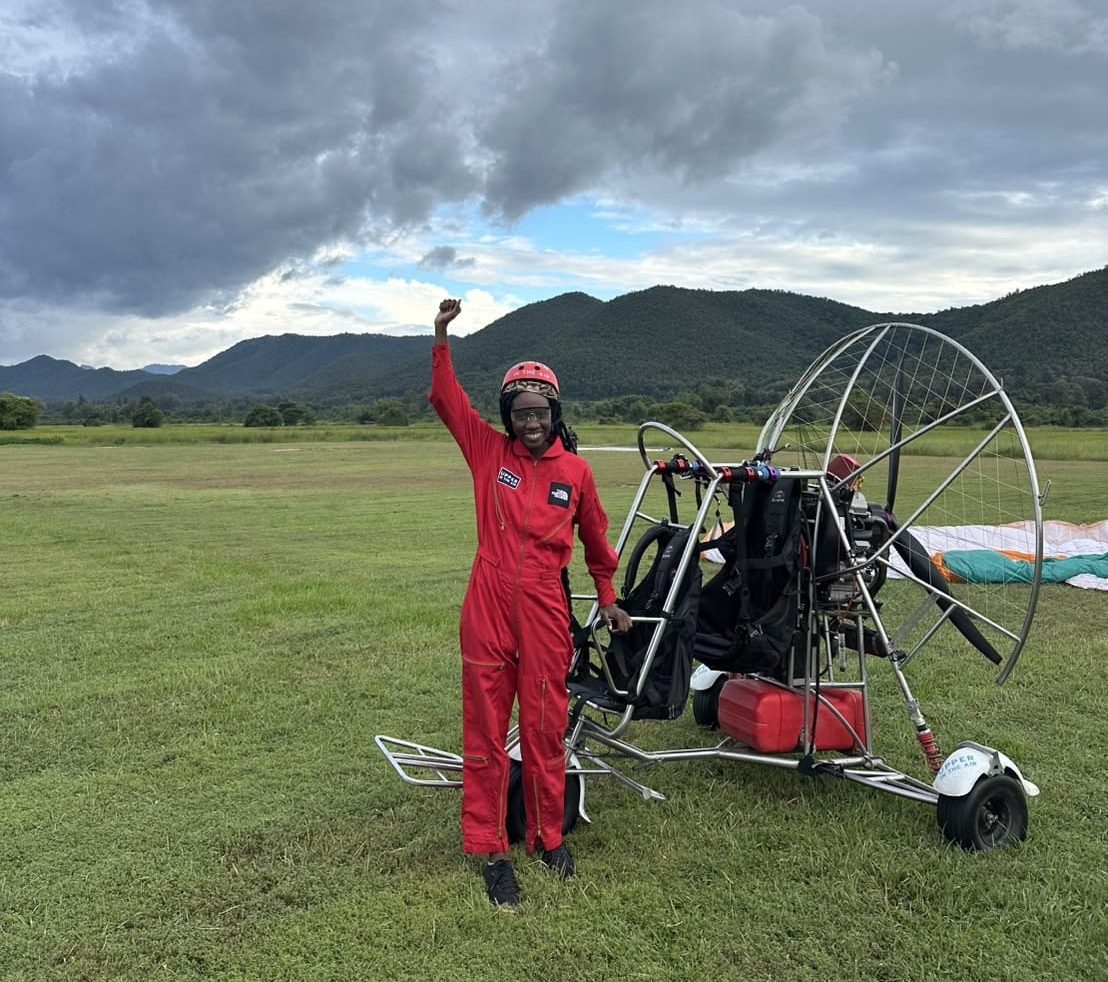
Tucked away in the open countryside — where wide fields stretch endlessly and the mountains frame the horizon — there’s a small paragliding school that delivers an experience that feels both effortless and unforgettable.

And surprisingly? It’s affordable. As a tourist, you can usually expect to pay around $60 USD (sometimes even less), which makes it one of those rare adrenaline experiences that doesn’t completely wreck your travel budget. An experience I had once mentally categorized as “extreme” and “luxury” was suddenly accessible.

That realization alone shifted something in me.

The Seamless Setup

What really impressed me was how smooth everything felt from start to finish.

The school arranged transportation, picking me up directly from my accommodation and driving me back afterward. No scrambling to find directions. No navigating unfamiliar highways. Just a simple message exchange and a confirmed pickup time.

They provided:

  • Protective goggles
  • A full paragliding suit
  • A GoPro with a selfie stick so I could film the entire flight
  • Photos taken before takeoff

They were thoughtful. Organized. Calm. The instructors moved with the kind of quiet confidence that makes your nervous system relax without you even noticing.

And that matters.

Because so many of us are taught that being adventurous means being reckless. But this experience felt intentional. Supported. Safe.

It challenged another quiet belief I’d carried: that doing something bold means doing it alone.

I wasn’t alone. I was guided.

That First Lift-Off

And then… you’re in the air.

There’s this surreal moment when your feet leave the ground. It’s not dramatic in the way movies make it seem. It’s softer. One second you’re running forward, and the next you’re floating.

The world below opens up in a way you’ve never seen before.

Looking down, everything felt miniature.

The trees looked like tiny Lego pieces snapped together into neat little patterns. The fields resembled patchwork quilts. The cows and horses grazing below were so small that at first I genuinely wondered if they were dogs.

It felt like looking into a dollhouse version of Earth.

And I remember thinking: This must be how God feels looking down at creation.

Not in an ego-driven way. But in an awe-filled way.

For the first time, I was seeing the world from a perspective that had always been inaccessible to me. And something about that literal shift in perspective created an internal one.

Up there, the world felt enormous.

And so did my life.

Perspective From Above

Paragliding wasn’t just an adrenaline activity — it was transformative.

From the sky, I could see just how expansive everything was. The land stretched beyond what I could fully process. Roads wound into the distance. The horizon seemed infinite.

It made my own fears feel smaller.

Many of us grow up in environments that feel limiting — socially, financially, emotionally. We’re often taught to shrink our desires to match our surroundings. To be practical. To stay safe. To stay close.

But hovering above the countryside outside Chiang Mai, I realized something very simple and very grounding:

The world is big.

Bigger than the stories we’re told about what’s possible.
Bigger than the narratives about who gets to explore it.
Bigger than the fears we inherit.

And I had navigated myself there.

I had booked the experience.
I had arranged the timing.
I had shown up.
I had trusted myself.

That did something for my sense of self.

Travel, especially solo travel, quietly builds evidence. Evidence that you can plan your life. Evidence that you can adapt. Evidence that you can place yourself in new environments and not only survive — but thrive.

While traveling, I found it easier to meet aligned people. Other travelers were open, curious, growth-oriented. Conversations felt expansive rather than familiar and fixed. It reminded me that the environments we choose shape who we believe we can be.

And once I saw that I could create that kind of experience for myself — independently, thoughtfully, affordably — I knew I could do it again.

Expansion Is Accessible

One of the most powerful parts of this experience was realizing how accessible it actually was.

It wasn’t a luxury reserved for influencers or thrill-seekers with unlimited budgets. It wasn’t chaotic or dangerous. It wasn’t financially irresponsible.

It was $60.
It was organized.
It was safe.
It was joyful.

And in a world where we now have access to social media, digital communities, and AI tools that can help us research, plan, and evaluate experiences in seconds, it has never been easier to design travel that fits your personality and your budget. Start your adventure! Check out myriad tour experiences in Thailand, among several other destinations here.

You don’t have to feel stuck.

You don’t have to wait for permission.

Sometimes expansion looks like therapy.
Sometimes it looks like journaling.
And sometimes… it looks like running off a hillside in Thailand and floating above fields that look like Legos.

I would do it again in a heartbeat.

But more importantly, I carry what it gave me.

Perspective.
Confidence.
Proof that the world is wider than I was taught.

And that I am fully capable of exploring it.